Krupówki and Wooden Architecture: Zakopane on Foot
Updated October 28, 2026 · 5 min read
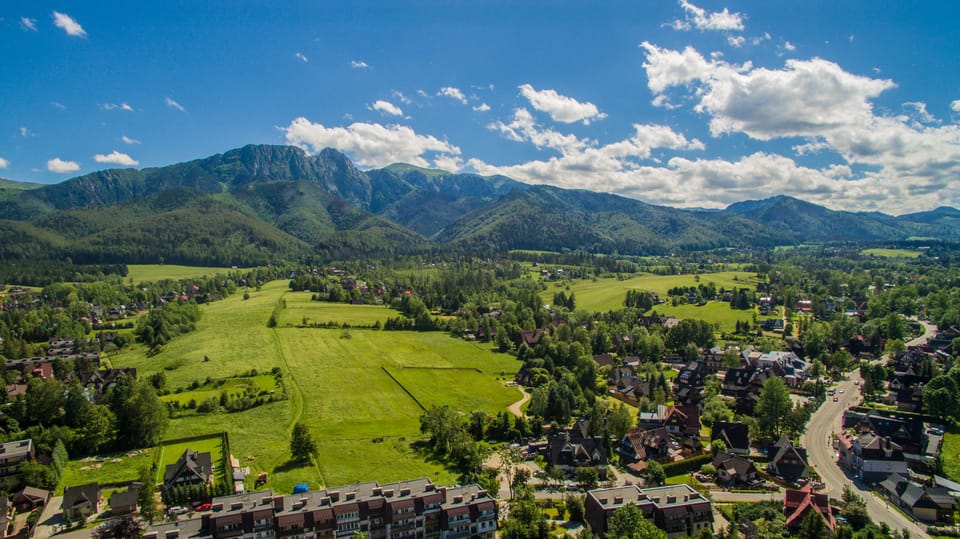
Krupówki is useful for orientation, but the best introduction to Zakopane’s architecture begins where the commercial promenade ends. Walk the main street once, then turn towards Kościeliska Street and Villa Koliba. That shift takes you from souvenir shops to the timber houses and carved details that made the town visually distinctive.
Use Krupówki as a starting line
The promenade is roughly a kilometre long and becomes extremely busy in high season. Early morning gives you more room to notice façades; evening is better for atmosphere. The lower end connects naturally with the market and the Gubałówka funicular, while the upper section continues towards Zamoyskiego Street.
Do not mistake the busiest street for the whole town. Krupówki is convenient for cafés, shops and finding your bearings, but its strongest local character is easier to see on the side streets. The Tatra Museum building at Krupówki 10 is itself a masonry interpretation of the Zakopane Style.
What the Zakopane Style means
Stanisław Witkiewicz developed the style at the end of the nineteenth century, drawing on Podhale timber construction rather than copying an Alpine resort. Look for steep roofs, broad eaves, carved wooden ornament, verandas and tall stone bases. These features were practical in a mountain climate, but Witkiewicz organised them into a deliberate architectural language.
Villa Koliba on Kościeliska Street was his first complete house in that style and is now a museum. Kościeliska Street also preserves older highlander cottages, so the walk shows both the vernacular source and the more designed villas that followed. Villa Oksza on Zamoyskiego Street is another important work, but combining every museum in one outing can turn a pleasant walk into a timetable exercise.
A sensible half-day route
Start near the lower end of Krupówki, visit the old church and Pęksowy Brzyzek cemetery area, continue along Kościeliska Street to Villa Koliba, then return through the centre. Check museum opening hours before setting out; they can change and some branches close on particular weekdays.
This route works in poor mountain weather because it does not depend on a panorama. It is less rewarding in heavy rain, when the exterior woodwork is difficult to study. For a broader selection of town and mountain options, use the things to do in Zakopane page. The point is not to avoid Krupówki, but to let it lead you into the quieter town behind it.